As someone who has spent years navigating the diagnostic industry landscape, I can tell you that understanding the complete value chain is critical for career growth.
Many laboratory professionals get stuck at the bench simply because they don’t see the bigger picture of how diagnostic businesses operate end-to-end.
The Diagnostic Business Value Chain
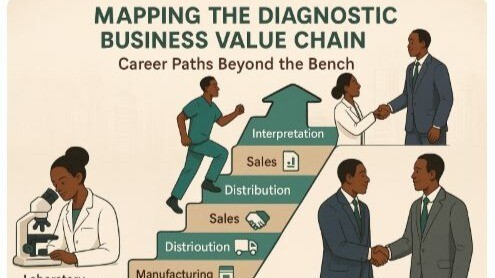
Let’s break down the entire value chain of medical diagnostic laboratories and explore the diverse career opportunities at each stage:
1. Research & Development
What happens here: Creation of new diagnostic tests, technologies, and methodologies
- Career opportunities:
- Research Scientists
- Biomarker Specialists
- Assay Development Specialists
- Clinical Trial Managers
- Regulatory Affairs Specialists
2. Manufacturing & Production
What happens here: Production of diagnostic kits, reagents, instruments, and consumables
- Career opportunities:
- Production Managers
- Quality Control Specialists
- Supply Chain Managers
- Manufacturing Engineers
- Validation Specialists
3. Distribution & Logistics
What happens here: Getting diagnostic products from manufacturers to laboratories
- Career opportunities:
- Supply Chain Managers
- Logistics Coordinators
- Inventory Managers
- Cold Chain Specialists
- Distribution Center Managers
4. Sales & Marketing
What happens here: Promoting diagnostic products/services to potential clients
- Career opportunities:
- Medical Science Liaisons
- Product Managers
- Sales Representatives
- Marketing Specialists
- Business Development Managers
5. Laboratory Operations
What happens here: Day-to-day running of diagnostic testing facilities
- Career opportunities:
- Laboratory Managers
- Quality Assurance Managers
- Laboratory Information Systems (LIS) Specialists
- Technical Supervisors
- Operations Directors
6. Testing & Analysis (The Bench)
What happens here: Performing actual diagnostic tests
- Career opportunities:
- Medical Laboratory Scientists
- Pathologists
- Cytotechnologists
- Histotechnologists
7. Results Interpretation & Reporting
What happens here: Analyzing test results and creating reports
- Career opportunities:
- Clinical Consultants
- Pathologists
- Laboratory Directors
- Medical Review Officers
- Genetic Counselors
8. Customer Service & Support
What happens here: Interfacing with healthcare providers and patients
- Career opportunities:
- Client Services Managers
- Patient Service Center Managers
- Technical Support Specialists
- Client Relationship Managers
- Phlebotomy Team Leaders
9. Billing & Revenue Cycle Management
What happens here: Ensuring proper reimbursement for diagnostic services
- Career opportunities:
- Revenue Cycle Managers
- Billing Specialists
- Coding Experts
- Claims Processors
- Reimbursement Specialists
10. Regulatory Compliance & Quality Assurance
What happens here: Ensuring laboratories meet all regulatory requirements
- Career opportunities:
- Quality Assurance Managers
- Regulatory Affairs Specialists
- Compliance Officers
- Auditors Accreditation Specialists
11. Data Management & Informatics
What happens here: Managing laboratory data and extracting insights
- Career opportunities:
- Bioinformaticians
- Laboratory Information Systems (LIS)
- Administrators
- Data Scientists
- Health Informatics Specialists
- Systems Integrators
12. Consulting & Advisory Services
What happens here: Providing expert guidance to laboratories and healthcare organizations
- Career opportunities:
- Laboratory Consultants
- Process Improvement Specialists
- Strategic Advisors
- Lean/Six Sigma Practitioners
- Change Management Consultants

Why Understanding the Value Chain Matters
Being on the bench (level 6 in our chain) is indeed at the lower end of the career ladder for several reasons:
- Limited strategic influence on business decisions.
- Less autonomy and decision-making authority.
- Often lower compensation compared to roles higher in the chain.
- More vulnerable to automation and outsourcing.
- Limited visibility to senior leadership.
Moving Up the Value Chain
The day I did this analysis years ago, I realized I needed to move up from my position as a bench scientist. I strategically targeted roles in as an Applications Specialist which allowed me to leverage my technical knowledge while developing business acumen.
What About You?
Now that I’ve shared this information with you, I’m curious:
- Where do you currently see yourself in this value chain?
- Which areas interest you most as potential career paths?
- What specific skills would you need to develop to make a transition?
The beauty of understanding this value chain is that you can make strategic career moves rather than random job changes. Whether you’re looking to increase your income, gain more authority, or find more fulfilling work, knowing where the opportunities lie is the first step.
What’s your plan? Where do you see yourself growing in this ecosystem?