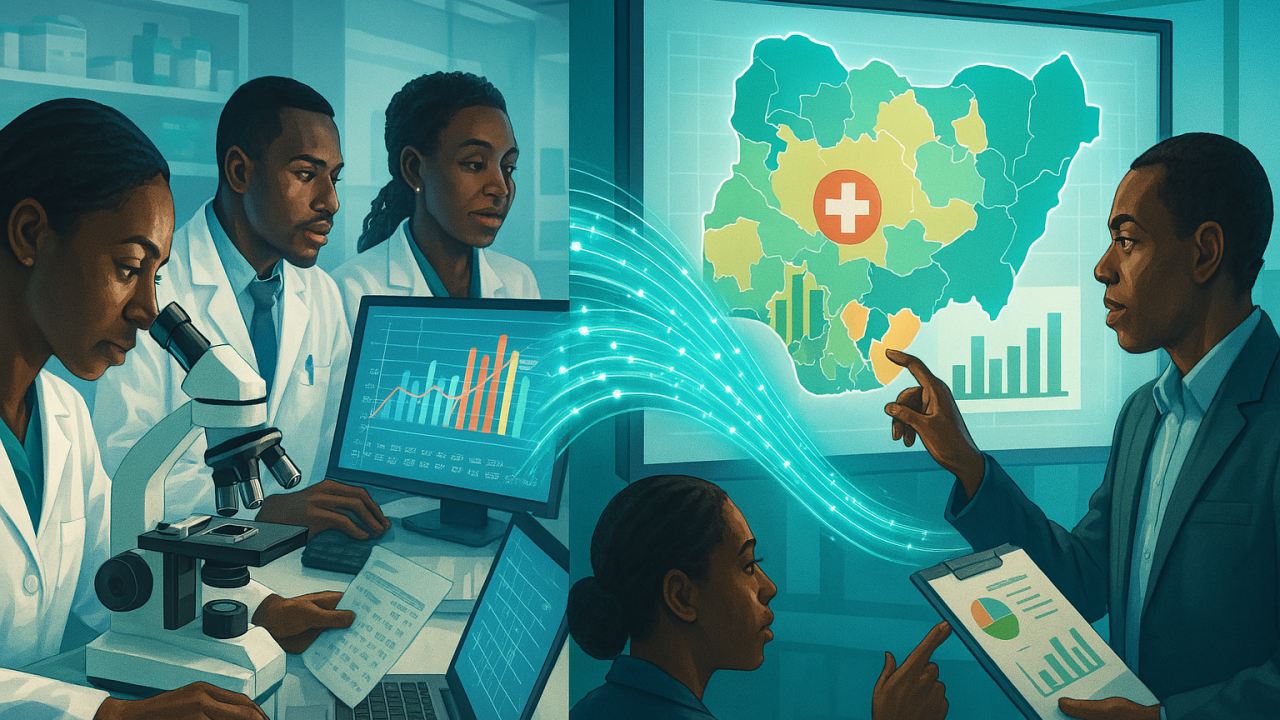
Each day, you deliver lab results that determine life-saving decisions for individual patients. But imagine this: what if your sharp analytical mind could shape health outcomes for entire populations?
Welcome to the world of Public Health and Epidemiology, where the microscope meets the megaphone.
In Nigeria, the tides are turning. As our public health infrastructure grows stronger, diagnostic professionals like you are becoming central to the story, not just behind the scenes but at the heart of national health security.
Why Public Health Needs People Like You
Your lab coat isn’t just a badge of science, it’s proof of a mindset built for population health:
- Pattern Recognition: You already connect the dots, now you get to see the bigger picture.
- Data Fluency: You’ve been living in the numbers; public health is about making them speak.
- Quality Matters: Your standards are high, and that’s exactly what disease surveillance needs.
- Systems Thinking: Diagnostic algorithms? That’s public health logic in motion.
Africa’s Urgent Need for Lab-Driven Public Health
Here’s what’s unfolding on the continent:
- New disease surveillance programs are launching
- Outbreak response relies more on labs than ever
- Laboratory networks are being expanded for regional readiness
- Global partnerships are investing in local diagnostics
And the people best positioned to ride this wave? You.

Pathways From Bench to Public Health Impact
Whether you’re curious or ready to pivot, these three routes will guide your journey:
The Academic Route
- Take an MPH (Public Health), focusing on epidemiology or lab sciences
- Join research teams addressing population health
- Learn health informatics and bio-surveillance methods
The Organizational Route
- Apply to public health labs or disease control programs
- Support HIV, TB, malaria, or AMR initiatives
- Join surveillance or outbreak response units
The Project-Based Route
- Volunteer in health campaigns or outbreak investigations
- Contribute to community diagnostics or field testing
- Lend your skills to program evaluation and quality improvement
Top Skills That Set You Apart
- Epidemiological Methods: From trend analysis to case definitions
- Health Data Systems: Surveillance dashboards, digital reporting
- Population Thinking: Seeing beyond the patient to the pattern
- Strategic Communication: Explaining lab data to non-lab stakeholders
- Program Execution: Aligning testing insights with real-world health needs

Start Here: Your Public Health Action Plan
- Research leading public health organizations in your region
- Enroll in free online courses (Coursera, WHO, CDC)
- Connect with public health professionals online
- Volunteer with NGOs, surveillance units, or response teams
- Study further-consider formal training when you’re ready
💡 Start small. Think big. Grow steady.