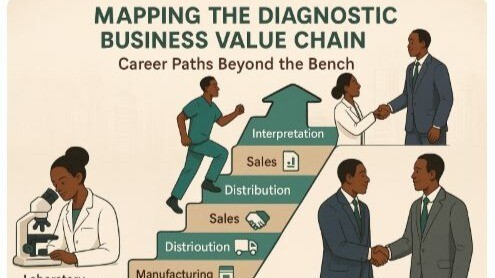
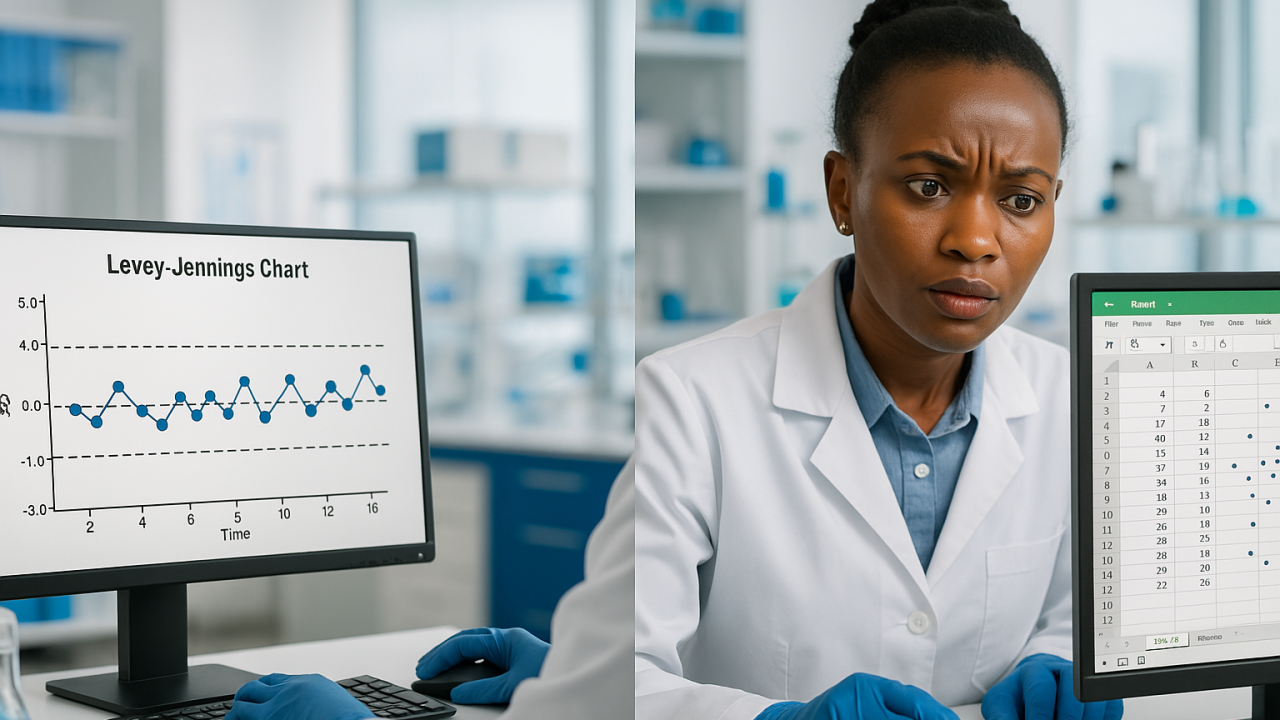
My dear laboratory colleagues, read carefully: once you leave the bench, the rules change dramatically. It’s no longer a Levy-Jennings graph scenario where statistical control is clearly defined. The metrics shift, the language transforms, and suddenly, your technical expertise needs new companions.
I learned this lesson the hard way, and today I’m sharing my experience so you can prepare more effectively than I did.
My Excel Nightmare: A Confession

When I transitioned from the laboratory to becoming a Key Accounts Team Lead managing our top 100 accounts, I brought my scientific precision and client relationship skills. I could handle meetings, follow-ups, and sales conversations with confidence.
But tracking year-on-year sales performance? That became my private nightmare.
Would you believe that I used to punch all those large numbers into my phone calculator and then enter them one by one into Excel? I had absolutely no idea that Excel could perform calculations! I would stay up almost all night adding and subtracting figures, producing reports with 6-7 digit numbers without proper formatting, no commas, just endless zeros stretching across my screen.
My boss would get visibly frustrated with my poorly formatted reports. “These numbers are impossible to read!” he would say, and I would apologize and promise to do better, never revealing that I didn’t know how to improve them.
No one knew my struggle until a senior colleague noticed my calculation notes spread across my desk one evening. When I explained my laborious process, she asked why I wasn’t using Excel for calculations.
I innocently replied, “My version of Excel doesn’t know how to add numbers.”
She burst into laughter and then sat beside me, patiently showing me basic formulas, formatting, and functions. What had been taking me hours suddenly took minutes. To this day, I love and honor her for that simple act of kindness that transformed my work life.
But here’s my point: you may not be as lucky as I was to find someone who notices your struggle and offers help. The business world often assumes you already possess these fundamental skills.
Essential Business Skills for Laboratory Professional

Based on my experience observing and supporting scientists transition to commercial roles, here are the critical skills you should develop before leaving the bench:
1. Microsoft Excel Proficiency
Beyond basic calculations, learn:
- Data organization and filtering
- Pivot tables for summarizing large datasets
- Basic data visualization
- VLOOKUP and other reference functions
- Formatting for business presentation
2. Data Storytelling
Scientific data and business data serve different purposes. Learn to:
- Extract meaningful business insights from numbers
- Present data in context of business objectives
- Create compelling visual representations
- Focus on actionable conclusions
- Tailor your message to different stakeholders
3. Business Communication
The passive voice and technical jargon of scientific writing won’t serve you in business settings:
- Master concise, active communication
- Develop presentation skills for non-technical audiences
- Learn to write effective emails and executive summaries
- Practice explaining complex concepts simply
- Adapt your communication to different business contexts
4. Project Management
Business initiatives lack the structured protocols of laboratory work:
- Learn to develop project timelines and deliverables
- Understand resource allocation and management
- Master tracking tools and methodologies
- Develop risk assessment and mitigation strategies
- Practice stakeholder management
5. Commercial Awareness
Understanding the business environment becomes crucial:
- Familiarize yourself with business metrics and KPIs
- Learn to read financial statements
- Understand market dynamics in the healthcare sector
- Develop awareness of competitive landscape
- Follow relevant regulatory developments
The Hidden Cost of Skill Gaps
Let me be candid about something many transitioning scientists don’t anticipate: skill gaps can damage your professional reputation before you’ve had a chance to establish it.
My Excel struggles weren’t just frustrating, they nearly derailed my career. Despite my strong performance in client relationships and technical knowledge, my reports raised questions about my competence. Had my colleague not intervened, I might have been labeled “not detail-oriented” or “lacks analytical skills”, the opposite of what laboratory work had cultivated in me.
The truth was simpler: I had a specific technical gap that no one thought to check because it seemed so basic in the business world.
Don’t let this happen to you. Identify and address these skill gaps before they become professional liabilities.
Till I write to you again, take some time to write out pertinent skills you must learn as you plan to make the shift.
Written with Love,
Nancy.