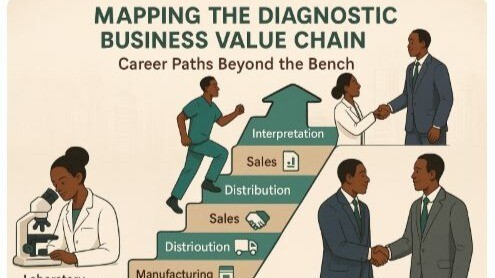
Let me tell you the story about a friend of mine, Soprinye had spent eight years perfecting her pipetting technique, she was good. Her hands moved with surgical precision across the laboratory bench at the Teaching Hospital where she worked, processing hundreds of samples each week. She knew every protocol by heart, could troubleshoot any analyzer malfunction, and had earned the respect of colleagues.
But when the hospital announced its digital transformation initiative, Soprinye felt a familiar knot in her stomach. The same feeling she had when automated analyzers first arrived, threatening to make manual testing obsolete. Only this time, it wasn’t just about new equipment. It was about a fundamental shift in what it means to work in healthcare diagnostics.
Here’s the thing: the laboratory world is changing faster than many professionals realize. And those who remain anchored to traditional bench skills alone may find themselves professionally stranded.
The Shifting Landscape of Laboratory Work
Walk into any modern diagnostic facility in Lagos or Abuja today, and you’ll see something remarkable. The traditional boundaries between laboratory scientist, data analyst, and healthcare consultant are blurring. Professionals who once spent their entire careers mastering one specialized area now find themselves needing to speak multiple professional languages.
Take molecular diagnostics, for example. What started as highly specialized testing for genetic disorders has exploded into mainstream medicine. COVID-19 thrust PCR testing into the spotlight, but that was just the beginning. Today’s laboratory professional needs to understand not just how to run these tests, but how to interpret complex genetic data, communicate results to non-laboratory clinicians, and even contribute to public health surveillance systems.
The numbers tell a clear story. According to recent industry reports, demand for traditional bench technicians is growing at roughly 2% annually, while positions requiring advanced analytical and consultative skills are expanding at 15-20% per year. The message is unmistakable: purely technical roles are becoming commoditized while hybrid roles that blend scientific expertise with business acumen are becoming premium positions.

What Upskilling Really Means
Let’s break down what upskilling looks like in practice, because it’s not just about collecting certificates or attending weekend workshops.
Technical Evolution Beyond Your Specialty Modern laboratory professionals need to be conversant across multiple disciplines. A microbiologist might need to understand basic molecular techniques. A clinical chemist should grasp the fundamentals of immunoassays. This isn’t about becoming an expert in everything, but about developing enough fluency to collaborate effectively and identify when problems require cross-disciplinary solutions.
Data Literacy as Core Competency Every sample processed generates data. But raw data means nothing without context and interpretation. Today’s laboratory professional needs to understand statistical analysis, quality metrics, and how to present findings in ways that drive clinical decision-making. This means getting comfortable with tools like Excel’s advanced functions, understanding basic statistical concepts, and learning to create compelling visualizations.
Business and Commercial Awareness Here’s what they don’t teach in medical laboratory science programs: laboratories are businesses. Understanding cost per test, turnaround time optimization, and how laboratory results impact patient outcomes and hospital finances isn’t just useful, it’s essential for career advancement. Professionals who can speak both scientific and business languages become invaluable bridge-builders in healthcare organizations.
Communication and Consultative Skills The days of simply reporting “positive” or “negative” are over. Modern laboratory professionals need to explain complex results to diverse audiences, from worried patients to busy clinicians to hospital administrators. This requires developing presentation skills, learning to write clear reports, and understanding how different stakeholders use laboratory information.
The Nigerian Context: Unique Opportunities and Challenges
Nigeria’s healthcare system presents both extraordinary opportunities and distinct challenges for laboratory professionals looking to expand their skills.
The opportunity side is compelling. Nigeria’s growing middle class is driving demand for advanced diagnostic services. Private hospitals in Lagos, Abuja, and Port Harcourt are investing heavily in sophisticated equipment and comprehensive testing menus. International organizations are establishing regional laboratories for clinical trials and surveillance programs. All of this creates demand for professionals who can bridge traditional laboratory expertise with modern healthcare delivery.
But there’s a flip side. Many Nigerian laboratory professionals work in resource-constrained environments where basic equipment maintenance can be challenging, let alone investing in advanced training. The temptation might be to focus solely on making existing systems work rather than preparing for future opportunities.
This is precisely why upskilling becomes even more critical in our context. Professionals who develop advanced skills while working in challenging environments often become highly sought after by organizations that value both technical expertise and operational resilience.
Practical Steps for Career Evolution
So what does this look like in practice? Let me share some concrete strategies that work in the Nigerian healthcare environment.
Start with Adjacent Skills Don’t try to completely reinvent yourself overnight. If you’re a clinical chemist, consider learning basic molecular biology techniques. If you work in microbiology, explore antimicrobial resistance surveillance methods. The goal is to expand your expertise in directions that complement your existing knowledge.
Embrace Technology Integration Every laboratory is becoming more digital. Learn how Laboratory Information Systems work beyond just entering results. Understand how data flows from analyzers to patient reports. Get comfortable with basic data analysis tools. These skills make you indispensable during system implementations and upgrades.
Develop Internal Consulting Abilities Practice explaining your work to non-laboratory colleagues. Volunteer to present quality improvement projects. Offer to train new staff or students. These experiences build the communication and teaching skills that distinguish senior professionals from bench technicians.
Pursue Relevant Certifications Strategic certification can accelerate your career transition. Consider programs in quality management, data analysis, or specialized testing areas. But choose wisely, focus on certifications that align with where you want your career to go, not just what’s available or trendy.
Build Cross-Functional Relationships Some of the best career opportunities come through professional relationships. Attend medical conferences, join professional associations, and participate in continuing education programs. Network not just with other laboratory professionals, but with clinicians, healthcare administrators, and industry representatives.
Making the Transition While Maintaining Excellence
Here’s the challenge: how do you develop new skills while maintaining high performance in your current role? The answer lies in strategic thinking about your professional development.
Think of upskilling as a long-term investment rather than a short-term project. Dedicate specific time each week to learning new skills, but don’t let this compromise your current responsibilities. Excellence in your current role provides the credibility needed to take on expanded responsibilities.
Look for opportunities to apply new skills within your existing position. If you’re learning data analysis, volunteer to help with quality improvement projects. If you’re developing business skills, offer to help with budget planning or vendor evaluations. This approach allows you to practice new competencies while demonstrating value to your current employer.
The Future Belongs to Versatile Professionals
The laboratory professionals who will thrive in the next decade won’t necessarily be those with the deepest technical expertise in a single area. Instead, they’ll be professionals who can connect scientific knowledge with practical problem-solving, who can communicate complex information to diverse audiences, and who understand how laboratory services fit into the broader healthcare ecosystem.
This doesn’t mean abandoning technical excellence. Core laboratory skills remain essential. But they’re no longer sufficient for career advancement. The future belongs to professionals who can combine technical competency with broader business and communication skills.
Your Next Steps
If you’re reading this and feeling overwhelmed, remember that career evolution is a process, not an event. Start with an honest assessment of where you are and where you want to be. Identify the skills gap between your current position and your target role. Then create a realistic timeline for developing those competencies.
The laboratory profession has never been more exciting or more challenging. New testing technologies, evolving healthcare delivery models, and changing patient expectations are creating opportunities for professionals willing to expand their skills and perspective.
The question isn’t whether the laboratory field will continue to evolve, it will. The question is whether you’ll evolve with it or find yourself left behind. The choice, and the opportunity, is yours.
Your bench skills got you this far. But to go beyond the bench, you’ll need something more.
The time to start building those skills is now.
Nancy.